
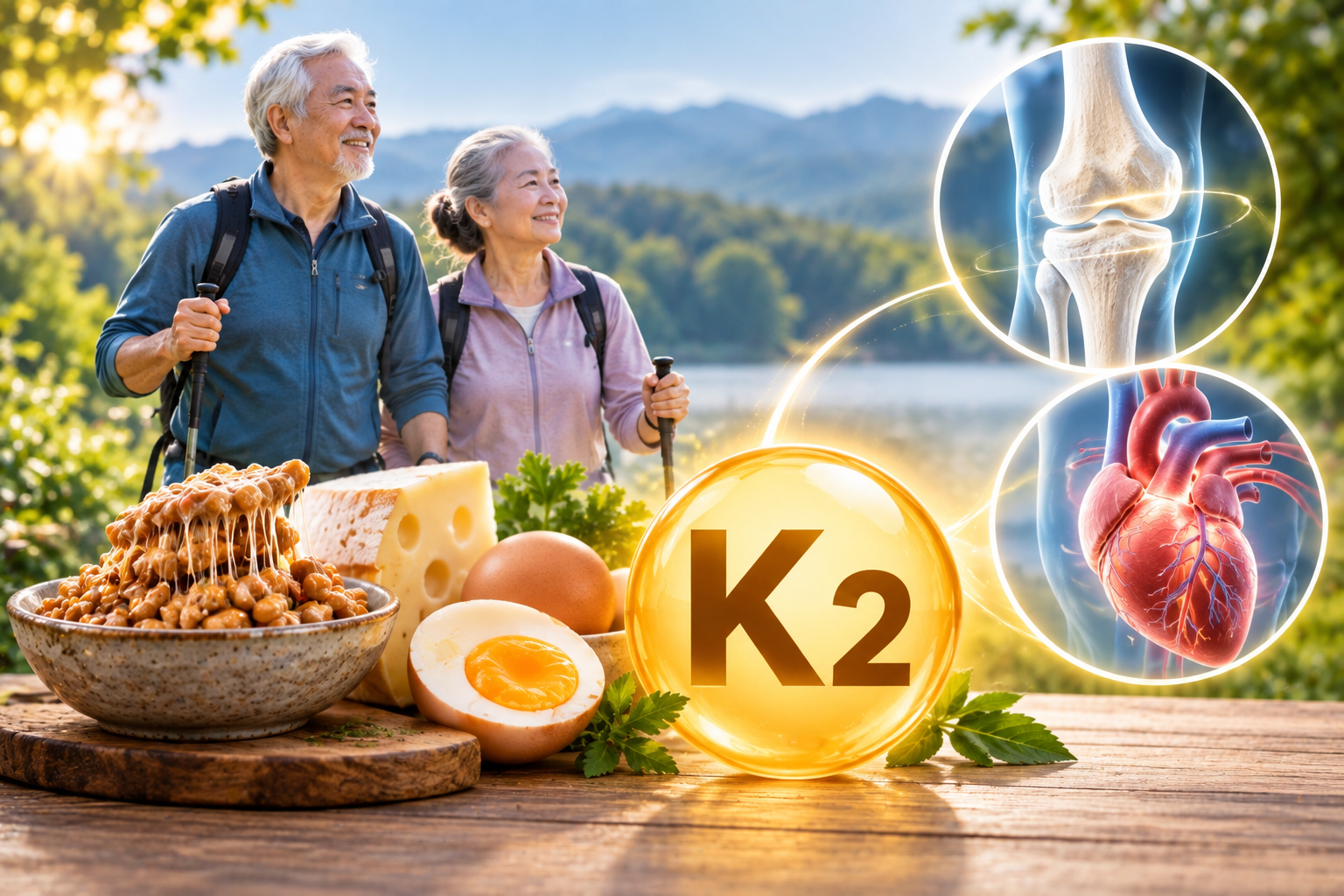
Vitamin K2 Benefits: A Guide to Bone, Heart & Healthy Aging
Vitamin K2 does not receive as much attention as vitamins C or D, yet it plays an important role in several processes that become increasingly relevant as we age. Vitamin K is essential for normal blood clotting and healthy bones, and vitamin K2 is involved in activating proteins that help regulate how calcium is used in the body.
For people interested in natural wellness and healthy aging, understanding vitamin K2 can be useful—particularly when considering bone health, nutrition, and the relationship between vitamin D and calcium.
In this guide, we examine vitamin K2 benefits, natural food sources, the difference between MK-4 and MK-7, what current research says about bone and cardiovascular health, and when supplementation requires special caution.
Related reading: Holistic Health Tips for Seniors
What Is Vitamin K2?
Vitamin K is a family of fat-soluble nutrients rather than a single compound. The two major forms are vitamin K1 and vitamin K2.
- Vitamin K1 (phylloquinone) is found primarily in green leafy vegetables.
- Vitamin K2 (menaquinones) includes several forms found in certain animal foods and fermented foods and can also be produced by bacteria.
Vitamin K2 is commonly discussed in terms of individual menaquinones such as MK-4 and MK-7. These forms differ in their food sources and how long they remain in circulation.
How Does Vitamin K2 Work in the Body?
One of vitamin K’s most important functions is helping activate certain vitamin-K-dependent proteins. Two frequently studied proteins are osteocalcin and matrix Gla protein (MGP).
Osteocalcin is associated with bone metabolism, while MGP is involved in regulating calcium deposition in soft tissues. This has led researchers to investigate whether adequate vitamin K—particularly K2—may have implications for both bone and cardiovascular health.
A simple way to understand the relationship is:
- Calcium provides an important building material for bones.
- Vitamin D helps the body absorb calcium.
- Vitamin K helps activate proteins involved in calcium regulation and bone metabolism.
This is one reason vitamin D and K2 are frequently discussed together, although taking vitamin D does not automatically mean that everyone needs a K2 supplement.
Vitamin K2 and Bone Health
Bone health becomes increasingly important with age because bone density and muscle strength can gradually decline, increasing the risk of falls and fractures.
Vitamin K contributes to normal bone health partly through the activation of osteocalcin, a protein involved in bone mineralization.
Research on vitamin K2 supplementation has produced encouraging findings for certain markers of bone metabolism, particularly in postmenopausal women. However, improvements in laboratory markers do not necessarily mean that supplementation will prevent fractures in every individual.
A comprehensive approach to maintaining strong bones should therefore include:
- Regular weight-bearing activity
- Safe resistance training
- Adequate protein
- Appropriate calcium intake
- Adequate vitamin D
- Foods providing vitamin K
- Fall-prevention and balance exercises
Vitamin K2 should be viewed as one component of this larger healthy-aging strategy rather than a stand-alone solution.
Does Vitamin K2 Protect the Heart?
This is one of the most interesting—and sometimes overstated—areas of vitamin K2 research.
Because vitamin-K-dependent matrix Gla protein is involved in regulating vascular calcification, researchers have investigated whether vitamin K2 supplementation might slow calcium accumulation in arteries.
Some clinical studies have reported promising results in selected populations. However, research overall has not yet established that routine K2 supplementation prevents heart attacks or cardiovascular disease in the general population.
For that reason, claims that vitamin K2 simply “removes calcium from the arteries” or “prevents heart disease” go beyond what current evidence can support.
For cardiovascular health, established lifestyle measures remain essential:
- Regular physical activity
- Maintaining healthy blood pressure
- Managing cholesterol and blood sugar
- A Mediterranean-style eating pattern
- Avoiding smoking
- Maintaining a healthy weight
Vitamin K2 Foods: Natural Sources
A food-first approach is a practical way to obtain vitamin K as part of an overall nutritious diet.
Foods That Provide Vitamin K2
- Natto – fermented soybeans and an especially concentrated source of MK-7
- Certain fermented cheeses
- Egg yolks
- Meat and poultry
- Some fermented foods
The amount and type of K2 can vary considerably among foods depending on fermentation, animal feed, and food-production methods.
Green vegetables such as kale, spinach, broccoli, and lettuce primarily provide vitamin K1. They remain valuable sources of vitamin K and should not be overlooked simply because they contain K1 rather than K2.
MK-4 vs. MK-7: What’s the Difference?
Vitamin K2 supplements commonly contain either MK-4 or MK-7.
MK-4
MK-4 is present in certain animal-derived foods and is also produced in the body from other forms of vitamin K. It has been studied extensively in relation to bone health, including at pharmacological doses in some countries.
MK-7
MK-7 is strongly associated with fermented foods such as natto. It remains in circulation longer than MK-4, which is one reason it is commonly used in dietary supplements.
Neither form should automatically be considered “best” for everyone. Supplement choice should depend on diet, health status, medications, and the reason supplementation is being considered.
Should Seniors Take a Vitamin K2 Supplement?
There is no universal recommendation that every older adult should take a vitamin K2 supplement.
For many people, the first priorities should be a nutrient-rich diet, regular exercise, adequate protein, and appropriate intake of vitamin D and calcium.
A K2 supplement may be worth discussing with a healthcare professional when there are specific concerns about bone health, dietary intake, osteoporosis risk, or other individual factors.
It is also important to remember that the established recommended intake for adults refers to total vitamin K, not specifically vitamin K2. Therefore, there is no universally established daily requirement specifically for K2.
Vitamin K2 Safety: An Important Warning About Warfarin
Vitamin K can interact significantly with warfarin (Coumadin) and similar vitamin K antagonist medications.
People taking warfarin should not suddenly start taking vitamin K2 supplements—or dramatically change their intake of vitamin-K-rich foods—without discussing the change with the healthcare professional managing their anticoagulation.
The issue is not necessarily avoiding all vitamin K. For people taking warfarin, maintaining a relatively consistent vitamin K intake is especially important because major changes can affect the medication’s anticoagulant effect.
Anyone taking prescription medication or managing a significant medical condition should discuss dietary supplements with a qualified healthcare professional before starting them.
A Natural Approach to Vitamin K2 and Healthy Aging
Vitamin K2 fits well within a broader philosophy of healthy aging: support the body with good nutrition, maintain movement and strength, and avoid assuming that any single nutrient is a cure-all.
A practical approach might include:
- Eating a varied diet rich in vegetables and minimally processed foods
- Including appropriate fermented foods when they fit your diet
- Maintaining adequate vitamin D through diet, sunlight, or supplementation when needed
- Performing regular strength and balance exercises
- Walking and staying physically active
- Reviewing supplements periodically rather than taking them automatically
Frequently Asked Questions About Vitamin K2
What is vitamin K2 good for?
Vitamin K2 participates in the activation of vitamin-K-dependent proteins involved in normal blood clotting, bone metabolism, and calcium regulation. Research continues into its potential role in cardiovascular health.
Should vitamin D3 and K2 be taken together?
Vitamin D and vitamin K have complementary roles in calcium and bone metabolism, which is why they are often combined in supplements. However, taking vitamin D does not automatically mean that everyone needs supplemental K2.
What is the best natural source of vitamin K2?
Natto, a traditional Japanese fermented soybean food, is particularly rich in MK-7. Certain cheeses, eggs, meat, and other fermented foods can also provide K2.
Is MK-7 better than MK-4?
MK-7 stays in circulation longer and is commonly used in supplements, while MK-4 has also been extensively studied. Current evidence does not justify declaring one form universally superior for every person and every health goal.
Can vitamin K2 prevent calcium from building up in arteries?
Vitamin-K-dependent proteins are involved in regulating vascular calcification, and some studies of K2 supplementation have produced promising results. However, evidence is not yet strong enough to conclude that K2 supplementation prevents cardiovascular disease in the general population.
Final Thoughts
Vitamin K2 is an intriguing nutrient with an established biological role in vitamin-K-dependent processes and growing research interest in bone and cardiovascular health.
For healthy aging, however, the most sensible approach remains holistic. Vitamin K2 works within a much larger system that includes vitamin D, calcium, protein, physical activity, sleep, and overall dietary quality.
Rather than viewing K2 as a miracle supplement, consider it one part of a balanced strategy for maintaining strong bones, physical function, and long-term wellness.